top of page


Cancer Research
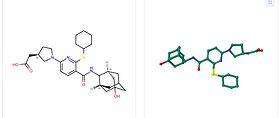
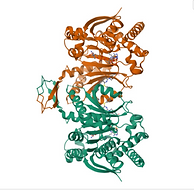
This process looks at cancer proteins and testing molecules that could stick to the protein. This process is called docking, which is like trying lots of tiny keys in a lock. Proteins are like tiny machines in your body that do important jobs, and cancer proteins are ones that have gone a bit wrong and can make cells grow too much.
Ligands are very small molecules - like tiny groups of atoms joined together - that can stick to proteins like keys fitting into a lock. We can use a computer to try each ligand in the protein and see which one fits best. If a ligand fits really well, it might be able to block or change how the cancer protein works, which could help scientists discover new medicines and treat cancer better.
There are thousands of cancer proteins each with multiple places a molecule could potentially stick and there are billions of molecules to iterate through (and there just the ones we know about). It is estimated 10^60 molecules are in existence.
This process uses a few programs to test hundreds of thousands (or millions if you choose) of molecules to any cancer protein you wish. It'll tell you if these molecules attach well to the cancer protein, how well they attach and if they attach better or worse to any already discovered molecule attachments. Once a match is found, these programs go through the process to see if that match has already been discovered and if it matches better than any existing molecule attachments.
Given the vast numbers of cancer proteins and molecules in existence the likelihood that there are good matches out there which could lead to changing or blocking how the cancer protein works is very high but the chances of finding them are very low.
Once this process is complete and a good candidate is found, there are a few more tests to run through to make sure the molecule holds up.
These are:
-
Molecular dynamics simulations
-
ADMET prediction
-
Binding free energy estimation
-
Experimental validation
Once all are in order you are able to send your results to a lab for testing, if your molecule turns out to change a cancer protein your results will be published and you would've contributed something incredible to humanity! An instructional on the second half of the process is coming soon...


bottom of page